


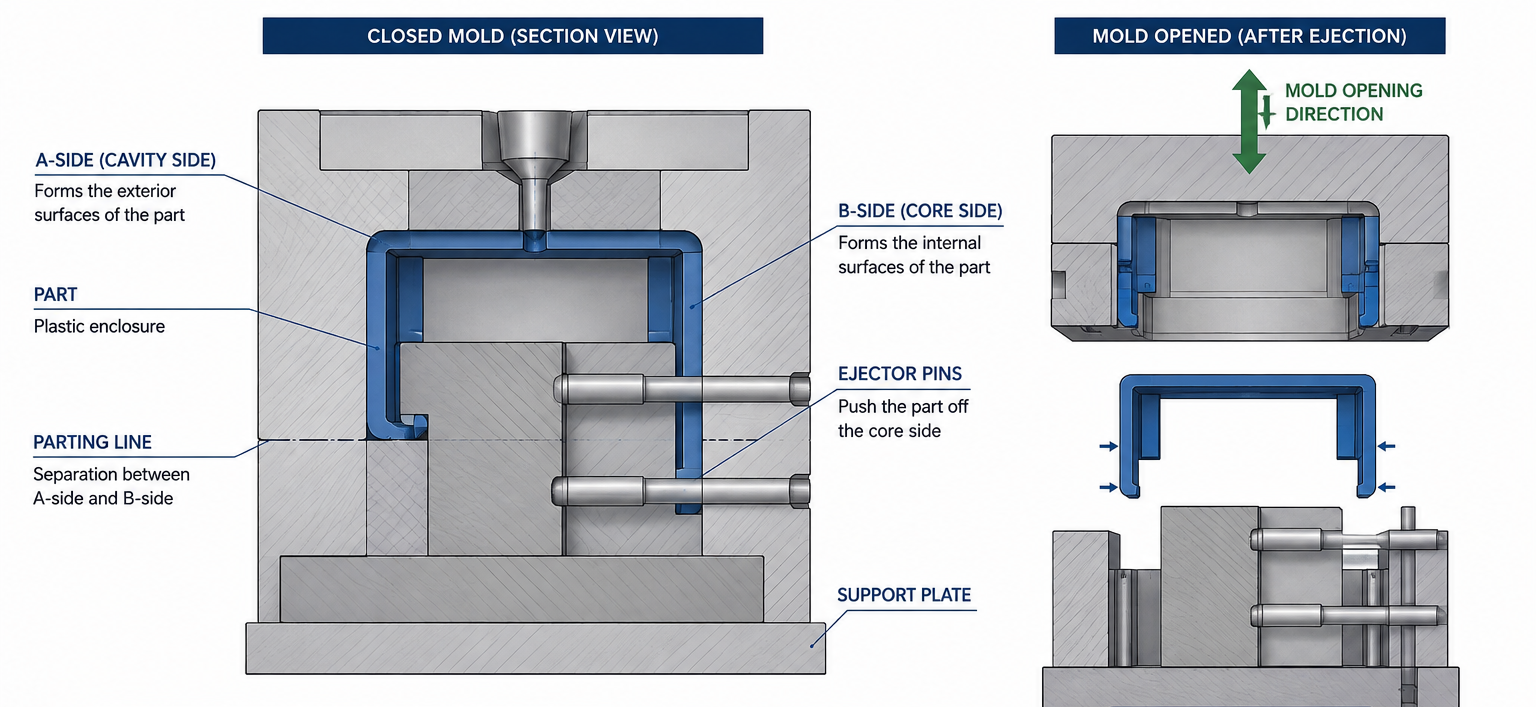
Core and Cavity Placement in Injection Molding: Designing the Mold to Control Part Release
Learn how core and cavity placement affects part retention, shrinkage, mold opening, and ejection. Practical guidelines for designing injection molded parts for reliable tooling.
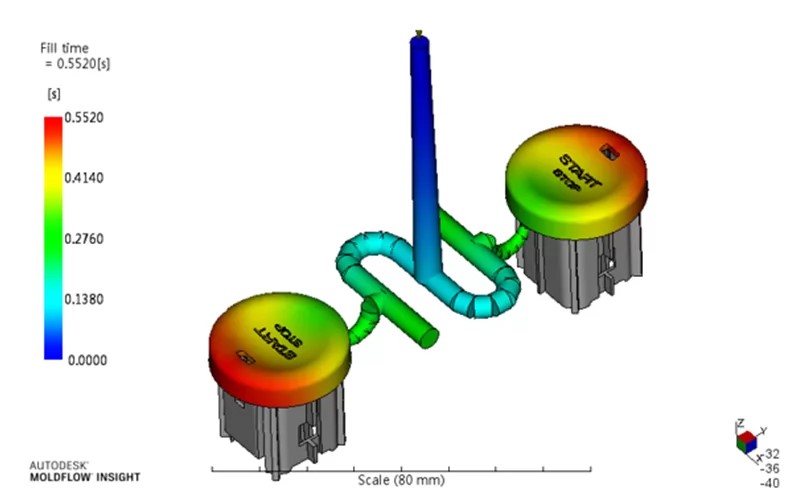
Using Mold Flow Analysis to Improve Injection Molding Design
Learn how Mold Flow Analysis helps injection molding engineers evaluate filling, injection pressure, gate location, knit lines, air traps, and material selection before tooling.
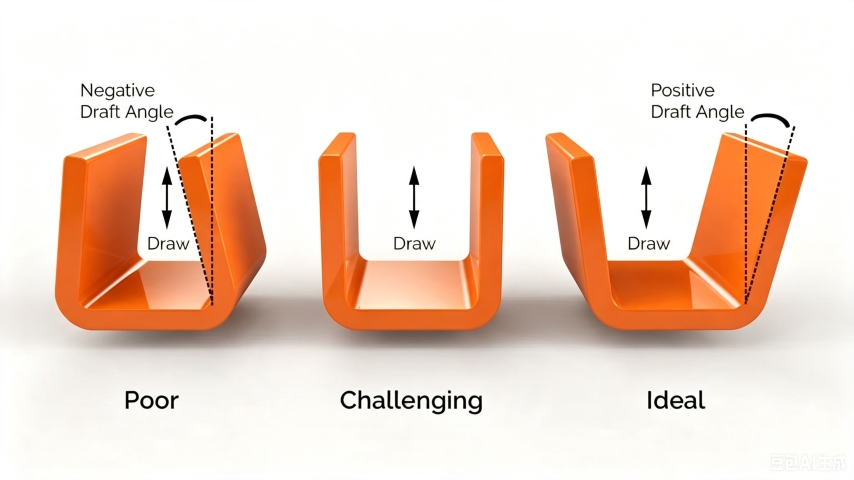
Draft Angle in Injection Molding: The Key Design Feature for Better Moldability
Learn why draft angle is essential in injection molding. Explore recommended draft values, texture considerations, ejection problems, and DFM guidelines for plastic part design.
Designing Living Hinges That Fold Flat and Last
A living hinge may be one of the simplest-looking features in plastic part design. It contains: Just a thin section of plastic connecting two rigid bodies. Yet despite its simplicity, the living hinge is one of the most frequently misdesigned features in injection molding. Many hinge failures occur long before the product reaches the customer.
Designing Living Hinges That Fold Flat and Last
A living hinge may be one of the simplest-looking features in plastic part design. It contains: Just a thin section of plastic connecting two rigid bodies. Yet despite its simplicity, the living hinge is one of the most frequently misdesigned features in injection molding. Many hinge failures occur long before the product reaches the customer.
Crush Ribs: Solving Tolerance Problems Without Tight Tolerances
One of the most common challenges in plastic product design is creating a reliable press fit. Consider a typical assembly: At first glance, the solution appears straightforward: Design the mating dimensions with a tight tolerance and create an interference fit. In practice, however, injection molding does not always favor this approach. Shrinkage variation, molding tolerances,
Sharp Corners Create Problems: Why Radii Matter in Injection Molded Parts
One of the most common comments during a DFM review is: “Can we add a radius here?” To many product designers, corner radii appear to be minor details. After all, a sharp corner seems simpler to design and often looks cleaner in CAD. However, sharp corners rarely benefit injection molded parts. In fact, they frequently
Design Parts That Are Easy to Change After the Mold Is Built
Every product team expects design changes during development. That is the purpose of prototyping. Engineers evaluate: And then make improvements. The problem is that not all design changes are equal. Some modifications can be completed by machining existing mold steel. Others require replacing inserts, rebuilding mold components, or manufacturing an entirely new tool. From a
Self-Mating Parts: How One Part Can Replace Two
One of the simplest ways to reduce tooling cost is often overlooked during product development: Instead of designing two mating parts, design one part that mates with itself. This concept is known as a self-mating part. When a part is rotated, flipped, or mirrored and can successfully assemble with an identical copy of itself, manufacturers
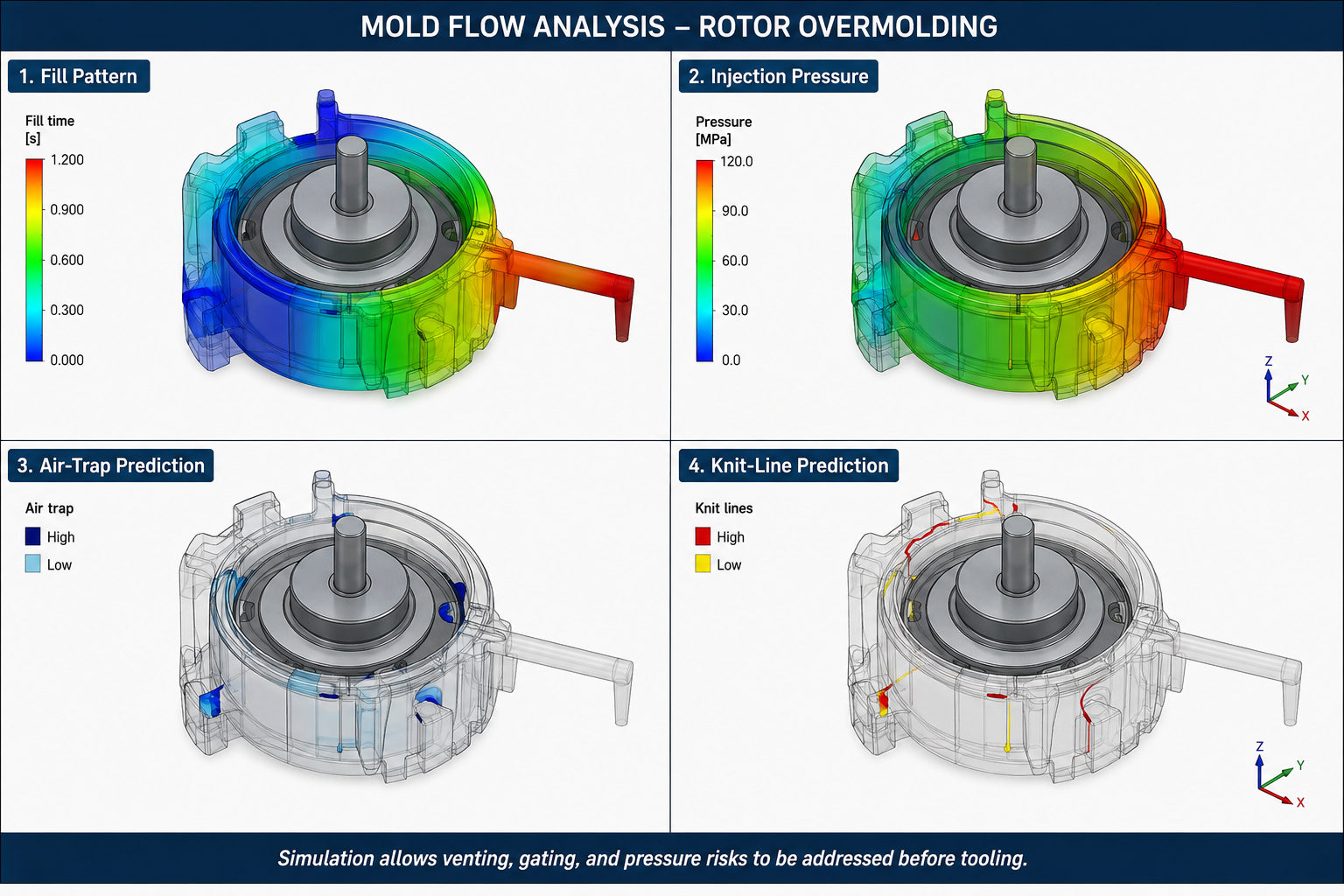
BLDC Motor Rotor Insert Molding: Venting, Pressure Control & Zero-Bubble SOP
Learn how to control BLDC motor rotor insert molding with proper venting, gate design, injection pressure, material drying, insert positioning, and a practical zero-bubble SOP.
Core and Cavity Placement in Injection Molding: Designing the Mold to Control Part Release
Learn how core and cavity placement affects part retention, shrinkage, mold opening, and ejection. Practical guidelines for designing injection molded parts for reliable tooling.
Using Mold Flow Analysis to Improve Injection Molding Design
Learn how Mold Flow Analysis helps injection molding engineers evaluate filling, injection pressure, gate location, knit lines, air traps, and material selection before tooling.
Draft Angle in Injection Molding: The Key Design Feature for Better Moldability
Learn why draft angle is essential in injection molding. Explore recommended draft values, texture considerations, ejection problems, and DFM guidelines for plastic part design.
Designing Living Hinges That Fold Flat and Last
A living hinge may be one of the simplest-looking features in plastic part design. It contains: Just a thin section of plastic connecting two rigid bodies. Yet despite its simplicity, the living hinge is one of the most frequently misdesigned features in injection molding. Many hinge failures occur long before the product reaches the customer.
Designing Living Hinges That Fold Flat and Last
A living hinge may be one of the simplest-looking features in plastic part design. It contains: Just a thin section of plastic connecting two rigid bodies. Yet despite its simplicity, the living hinge is one of the most frequently misdesigned features in injection molding. Many hinge failures occur long before the product reaches the customer.
Crush Ribs: Solving Tolerance Problems Without Tight Tolerances
One of the most common challenges in plastic product design is creating a reliable press fit. Consider a typical assembly: At first glance, the solution appears straightforward: Design the mating dimensions with a tight tolerance and create an interference fit. In practice, however, injection molding does not always favor this approach. Shrinkage variation, molding tolerances,
Sharp Corners Create Problems: Why Radii Matter in Injection Molded Parts
One of the most common comments during a DFM review is: “Can we add a radius here?” To many product designers, corner radii appear to be minor details. After all, a sharp corner seems simpler to design and often looks cleaner in CAD. However, sharp corners rarely benefit injection molded parts. In fact, they frequently